01
Fraud & scam fund recovery
Tracing money through banks, payment processors and shell accounts to build a claim that can actually be enforced.
How this works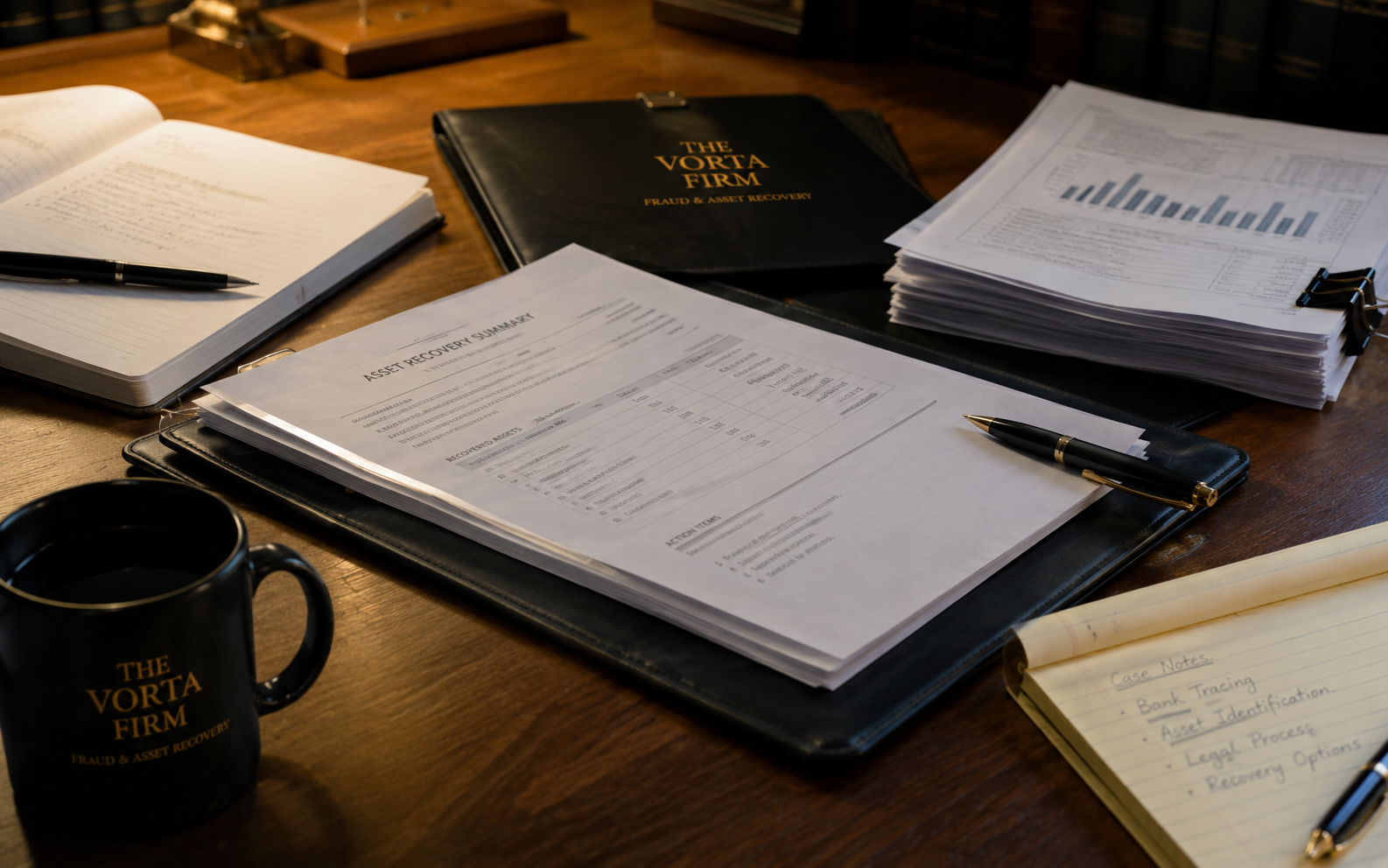
We act for individuals and businesses defrauded by scammers, fraudulent investment schemes and crypto theft — pairing forensic asset tracing with the legal standing to act on what we find.
Freezing injunctions, disclosure orders and civil fraud claims — built to compel the people and institutions holding your money to account for it.
Tracing money through banks, payment processors and shell accounts to build a claim that can actually be enforced.
How this worksCivil claims, freezing injunctions and enforcement against the people and entities holding your money.
How this worksOn-chain forensics across wallets, mixers and bridges, paired with exchange-level legal pressure.
How this worksIndependent review of a scheme, adviser or platform — before you commit more, or after you suspect the worst.
How this worksMost firms show you a process diagram. The part that matters is stage four — where we tell you if it is not worth pursuing.
A confidential intake call covering the scheme, how the money moved, and what evidence already exists.
Forensic tracing through banking rails or the blockchain to establish where funds landed and who controls them now.
Freezing requests, exchange disclosure and direct negotiation where possible. Litigation where necessary.
Funds returned, judgment secured, or a straight answer that recovery is not viable — before you spend more chasing it.
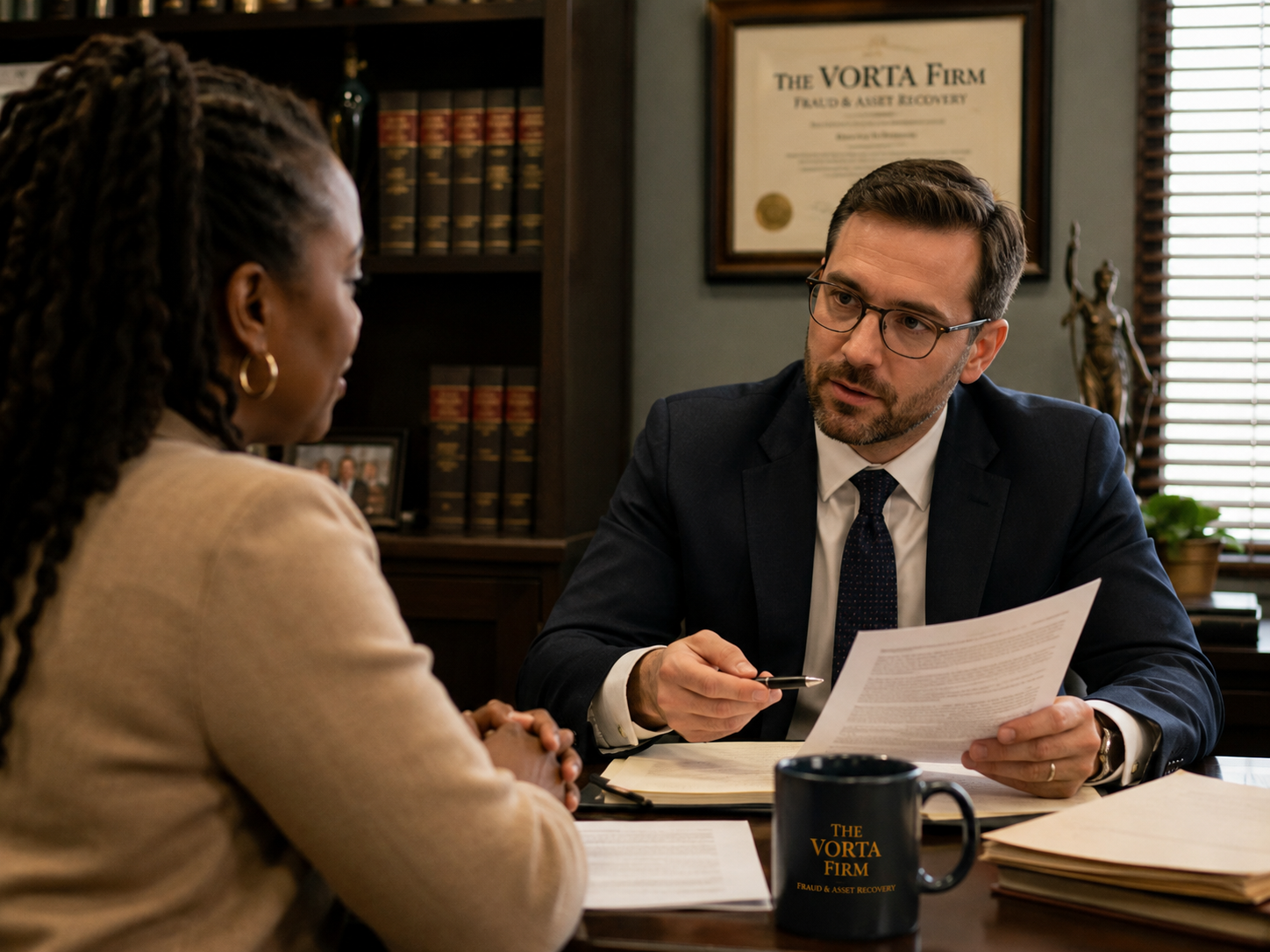
By the time a police report is logged, the money has usually moved two or three times. Recovery depends on acting inside that window — which means tracing and legal action running together, not one after the other.
Fraud clients rarely want to be named, and a wall of five-star reviews is exactly what a recovery scam looks like. So we publish anonymised case facts instead. [Replace with your real matters, cleared for publication.]
Scammers impersonate genuine firms. We will never contact you first, never ask for a recovery fee before assesment or ask for your passwords, seed phrases or two-factor codes.
Genuine correspondence only ever comes from support@thevorta.com. If a message claiming to be from us asks for any of the above, it is not us — verify before replying.
Freezing requests and exchange holds are most effective in few days/months immediately after a loss. A first review costs nothing.